

If you’ve ever opened an email that felt like it was written just for you, you already know the power of great segmentation.
People want messages that recognize who they are and what they care about. That’s where email marketing segmentation and strategies come in. When you group your audience by demographics, location, interests, or actions, you transform your email campaigns from generic broadcasts into meaningful conversations.
The real magic happens when those segments guide your timing and content. Maybe you’re reminding someone about an abandoned cart, re-engaging a subscriber who has gone quiet, or surprising a loyal customer with a reward that feels spot-on. Segmentation turns each of those touchpoints into a moment of connection, and that’s what keeps people opening your emails, clicking, and coming back.
What’s the Difference Between Email Segmentation & Personalization?
Before we dive in, let’s unpack the difference between these two ideas because they work together but aren’t the same.

What is Segmentation?
- Groups subscribers based on shared characteristics
- Uses traits like demographics, location, interests, or behaviors
- Helps you send the right type of content to the right group
What is Personalization?
- Tailors the message to an individual
- Uses data like name, purchase history, or past engagement
- Makes each email feel uniquely relevant to the recipient
Ways to Segment Email Lists for Targeted Email Campaigns
List segmentation is all about grouping people by what they have in common so you can send messages that actually make sense for them. Once your audience is organized this way, your emails are more thoughtful as well as more relevant and useful to the recipient.
There are a dozen ways or more to segment your list, but these are a few that create more meaningful, personalized experiences for your subscribers.
| Type of segmentation | Examples | Great for |
| Behavior-Based Segmentation | Past purchases, website browsing history, cart abandonment | Sending timely nudges, product recommendations, or behavior-driven campaigns |
| Engagement / Lifecycle | Email opens, clicks, inactivity, stage in customer journey (new lead, active customer, lapsed customer) | Re-engaging inactive subscribers, nurturing leads, or rewarding loyal customers |
| Interest-Based / Preference | Preferred topics, product categories, content types | Sending content and offers that match what subscribers actually care about |
| Demographic | Age, income, education, job title, etc. | Tailoring messages for life stage, career level, or broad audience categories |
| Geographic | Country, city, region, time zone | Local promotions, event invitations, or region-specific messaging |
| Psychographic | Interests, values, hobbies, lifestyle, motivations | Aligning messaging with subscriber mindset and lifestyle for higher engagement |
The best segmentation types are a mix of what people do, how they engage, and who they are. The real power comes when you combine them. For example, you can layer behavioral, interest, and lifecycle data to create richer, more precise segments that make your emails feel even more relevant.
Persona-Based Email Segmentation: Connect Your Emails to the Bigger Picture
We love persona-based segmentation because it combines different types of segmentation, from demographic to psychographic, to make your emails feel intentional and part of a bigger content strategy.
When your campaigns align with your blog posts, social content, and lead magnets, every touchpoint works together. Your audience experiences a smooth journey and your emails become helpful, relevant moments rather than just another message in the inbox.
Here’s how to make it work:
- Build audience personas
Think of personas as detailed snapshots of your ideal customers. Include demographics, interests, motivations, and challenges. The more you understand about them, the better you can create emails that truly resonate. - Group your subscribers
Use the data you have, like browsing history, past purchases, and how people signed up for email, to organize your audience into these personas. Many subscribers may fit into more than one group, and that’s okay. Segments can overlap and change over time. - Personalize your emails
Tailor your subject lines, content, visuals, and send times to match each persona. The goal is to make every email feel thoughtful and relevant so it really connects with your audience.
With persona-based segmentation, your emails become more than messages. They are a meaningful part of your audience’s journey and help every piece of content in your strategy work together.
Understanding Segmenting vs. Segmentation Strategy
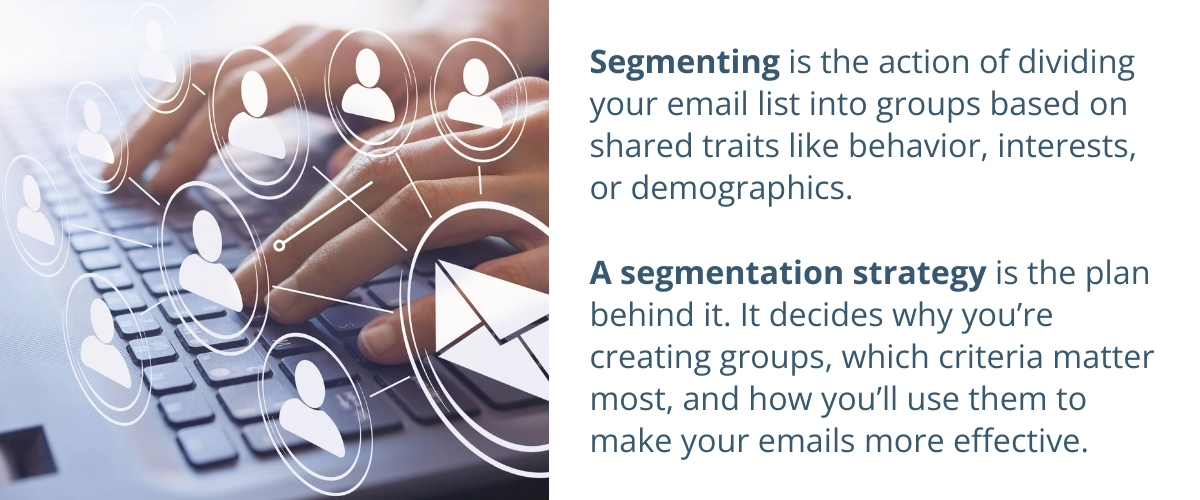
Segmenting is the action of dividing your email list into groups based on shared traits like behavior, interests, or demographics.
A segmentation strategy is the plan behind it. It decides why you’re creating groups, which criteria matter most, and how you’ll use them to make your emails more effective.
Put them together and your emails stop feeling random and start connecting with the right people at the right time.
20 Email Segmentation Strategies Made Simple 
A segmentation strategy is simply a plan for how you divide your audience into meaningful groups so your emails feel relevant and timely. It’s not just about organizing your list. It’s also about thinking carefully about what matters to your subscribers and how you can meet them where they are.
Here are some strategies to consider:
- Customer Engagement: Segment by how subscribers interact with your emails to re-engage inactive users or reward your most active fans.
- Newcomers to Your Business: Give new subscribers a warm welcome with helpful content and brand introductions.
- Past Purchase History: Recommend products, upsell, or cross-sell based on what someone has bought before.
- Abandoned Cart Value: Prioritize high-value carts with reminders or incentives to complete the purchase.
- Divide Your B2B and B2C Audiences: Tailor messaging, tone, and offers for businesses versus individual customers.
- Target High Open Rate Subscribers: Treat highly engaged subscribers like VIPs with exclusive content or early access.
- Address Changes in Customer Behavior: Keep campaigns timely by adjusting for shifts in interests, buying habits, or engagement levels.
- Cross-Sell to Existing Customers: Encourage complementary product purchases by understanding what customers already own.
- Re-Engage Inactive Users: Send special offers or updates to win back subscribers who haven’t interacted in a while.
- Engage VIP Customers: Recognize your top customers with loyalty rewards, exclusive content, or sneak peeks.
- Celebrate Customer Birthdays: Send personalized messages and special offers to make subscribers feel appreciated.
- Promote Seasonal Offers: Segment based on holidays, seasonal trends, or annual events for timely campaigns.
- Location-Based Promotions: Tailor messaging for regional events, store openings, or local offers.
- Offer Exclusive Early Access to New Products: Make loyal customers feel special by giving them first dibs.
- Educate Users With How-To Content Based on Product Use: Provide helpful tips or tutorials relevant to each subscriber.
- Target High Spenders With Premium Offers: Recognize your top spenders and give them special treatment or premium deals.
- Reactivate One-Time Buyers: Encourage past customers to return with targeted incentives or reminders.
- Promote Content Based on Browsing History: Deliver articles, products, or guides aligned with what subscribers are exploring.
- Send Targeted Campaigns Based on Quiz or Survey Results: Use insights from polls or forms to deliver highly relevant content.
- Segment by Device for UX Optimization: Adjust email design and content based on whether subscribers are on desktop, mobile, or tablet.
Turn Messages into Meaningful Connections
Email marketing is more than just sending messages. It’s about reaching the right people with the right content at the right time. Our strategies focus on understanding your audience, spotting engagement trends, and shaping campaigns that truly resonate.
We help review current efforts, plan automated workflows, create content that honors your brand’s voice, and provide design and reporting guidance so every email supports your bigger marketing goals and creates meaningful connections with your audience.
Have questions or want to get started? Connect with our digital marketing team today.
About the author: Jasmine Paul is a Senior Content Strategist at Mad Fish Digital, specializing in developing content strategies that help brands engage their audience, tell their story, and drive measurable results across digital channels.